Quick answer
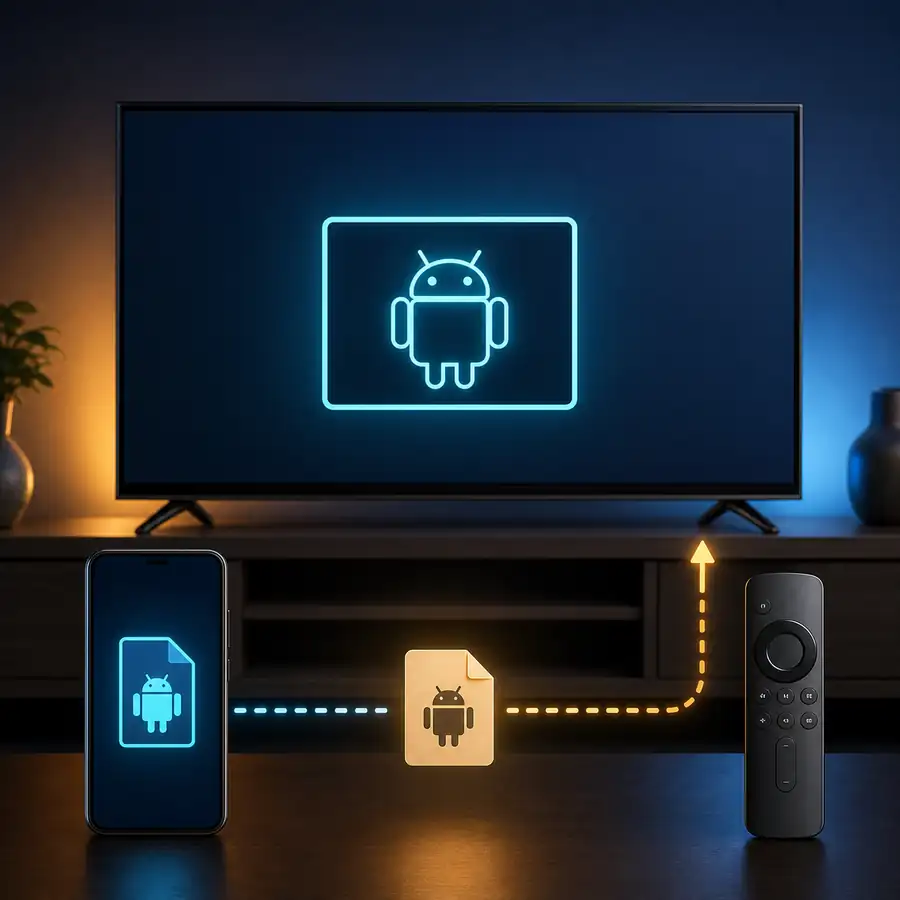
A Shabakaty Share APK will not automatically work on every Android TV or Google TV device. Check the Android version, free space, network, package name, file type and TV input method. If the link works on a phone but not on the TV, test the browser and network before replacing the APK. If the app installs but cannot be controlled with the remote, treat it as a phone-focused build and use a browser or a verified TV build instead of repeating random installs.
| Primary keyword | Shabakaty Share on Android TV |
|---|---|
| Search intent | Use Share resources on a TV while checking compatibility |
| First test | Open the Share link from the TV and phone on the same network |
| Do not confuse with | Shabakaty TV channels, generic APK installation, or Share for Windows |
| Safety rule | Never treat a version number or mirror page as proof of a trusted package |
1. Define the Share task before choosing a route
The phrase Shabakaty Share on Android TV can describe several jobs. You may want to open share.shabakaty in the TV browser, browse a resource, or install an Android app on the screen. Those jobs need different preparation. A browser may be enough for a link, while an installed app needs controls that can be focused with arrows and a Back button. Write the desired outcome in one sentence before searching for an APK so you do not install an app that cannot provide it.
- Link or files: start with the TV browser and network.
- Installed app: verify display and remote support before transferring it.
2. Check Android TV, Google TV and the input method
Android TV uses the Android architecture familiar from phones, but a TV interface must support clear focus, remote navigation and readable layouts. A Share package may install and then open in portrait mode, hide focus, or ask for touch input that the remote cannot provide. Record the device model, Android version and available storage. The word TV in a filename is not proof that a package was designed for your screen.
- Record the model and Android version before using an external file.
- Test directional focus, Back and menu actions in any trial run.
- Keep the device store as the first option when it lists the app.
3. Test the browser before installing a Share APK
If your goal is to open a Share page or resource, try the TV browser first. Open a trusted address, confirm that ordinary pages load, then compare the phone and TV on the same Wi-Fi. If the phone works and the TV fails, the issue may be the browser, DNS or page layout rather than an APK. Move to package checks only when you need a real installed interface, and keep the browser as a fallback route.
- Compare the phone and TV on the same network.
- Try another browser before changing DNS or reinstalling an app.
4. Match the APK source, package name and permissions
The phrase Shabakaty Share Android TV does not prove that an official TV build exists. Before moving a file, record the source address, publisher, package name, version, size and Android requirement. Separate a single APK from XAPK or APKS; split packages may need a special installer and may not fit the TV. Check whether the requested permissions match the task and stop when a file has an unexplained publisher or access request. A higher number on an unverified mirror is not a safety signal, and this guide does not label a package official without a source that can be checked.
- Compare publisher, package name, version and size with the source.
- Check the file type before transfer and never rename it by hand.
- Stop when permissions are unrelated or the publisher is unclear.
5. Transfer the file using a method your TV supports
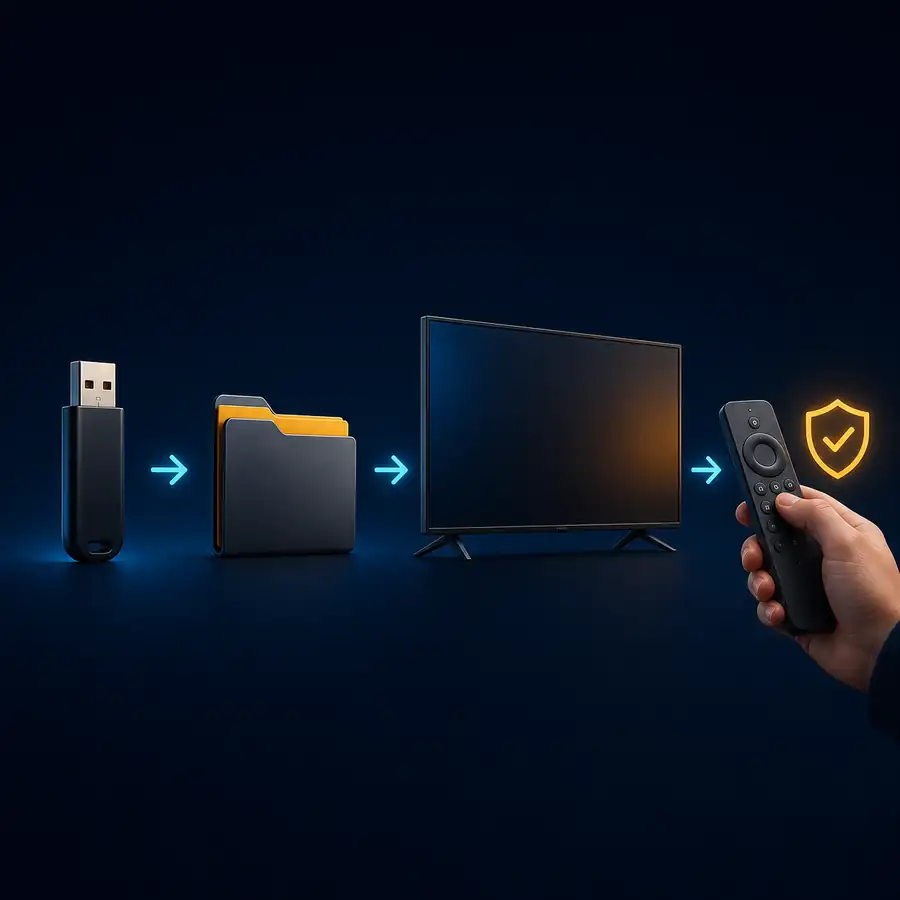
Transfer may use USB, a file manager, a local network or ADB, but each route depends on the TV model and settings. Use a clear folder and keep the original file until verification is complete. ADB is a developer tool with a client, server and device daemon; it is not a shortcut around compatibility. Grant install permission only to the app that opens the package and turn it off after testing. If you use wireless sharing, confirm that the phone and TV are on the expected network before moving the file.
- Choose a trusted USB or file manager instead of an unknown share.
- Use ADB only when you understand the device and debugging setup.
6. Test Share with the remote and the network
After opening Share, run a small path: open the page or folder, move focus between items, press Back and open one resource. Check whether the TV keyboard appears and whether selection works without touch. An app that opens but cannot move focus has a TV design problem, not necessarily a network problem. Test another network or hotspot as well, because a phone working on mobile data does not prove that the TV Wi-Fi reaches the same service. Record the exact screen and message that failed so you do not repeat an unhelpful installation.
- Test focus, arrows and Back before browsing every resource.
- Compare the TV network with the phone when a page is blank.
- Record whether the failure happens at open, list, resource or playback.
7. Keep a rollback plan and respect compatibility limits
If Share fails after installation, do not wipe the TV or keep trying modified builds. Remove the trial app, turn off the unknown-source permission and return to the browser or the general Share guide. When an app only works on a phone, the practical answer may be to open the resource on the phone and use a supported Google TV control or cast flow, not to force a portrait interface onto the TV. This guide does not claim an official Share TV release or provide a permanent APK link; verify the current source before each install.
- Remove an incompatible build and disable its temporary permission.
- Use the browser or phone as a fallback for the resource.
Choose a route by device and goal
Use this table to choose a starting point. Android TV does not turn every phone app into a TV app, and an APK file does not prove that the result will be usable with a remote.
| Device or route | Best for | What to check |
|---|---|---|
| Android TV browser | Open a Share link or resource | Network, browser, sign-in and remote focus |
| Share APK on Android TV | Use an installed interface | Package, display, D-pad, permissions and storage |
| Phone plus Google TV | Control or cast from a phone | Same network, pairing and TV code |
| Windows computer | Use a browser or emulator | Share page, network and no unknown EXE |
| Shabakaty TV | Channels, matches or live playback | Channel list, TV package and network path |
A safe Shabakaty Share on Android TV sequence
1. State the goal
Decide whether you need a link, files or an installed app, and separate that from channel intent.
2. Record device and network
Write down the Android TV model, system version, network and free space before transfer.
3. Try the browser
Open Share on the TV and phone through the same connection, then compare the failure.
4. Verify the package
Match the source, publisher, package, version, file type and permissions before installing.
5. Test and roll back
Test focus, Back and one resource; disable permissions and remove the build if it fails.
Common Share problems on Android TV
The link works on a phone but not on the TV
Compare network, browser and DNS, then try another address. A different result is not proof that the APK is broken.
The app installs but the screen is portrait or buttons cannot be focused
The package may be phone-focused. Test D-pad and Back, then use a browser or a verified TV build.
The APK is missing in the file manager
Check the transfer folder, extension, storage and file-manager permission. Do not rename XAPK or APKS to APK.
Android shows an unknown-source prompt
After checking the source, allow the app that opens the file only, then disable the permission after installation.
Official references and limits
We reviewed Android TV, Android Debug Bridge and Google TV help to confirm navigation, transfer and pairing principles. These references do not prove that Shabakaty Share has an official TV build, so verify the current source and package for each device.
- Android TV overview - Explains TV interface and publishing requirements beyond a phone layout.
- Android Debug Bridge documentation - Describes ADB as a communication, install and debugging tool when configured.
- Google TV remote help - Explains pairing and phone control on the same wireless network.
Choose the guide that matches your goal
General Shabakaty Share guide
For browser versus APK decisions, source checks and phone or computer access.
Open the Share guideShabakaty TV channels
For channels, matches and TV playback rather than Share resources.
Read the Shabakaty TV guideInstall an APK on Android TV
For generic USB, XAPK and ADB steps before Share-specific checks.
Read the installation guideShabakaty Share for Windows
For browser or emulator access from a computer and Windows network checks.
Open the computer guideFix Shabakaty not working
When several services fail on the same network, start with the wider diagnosis.
Start the network checklistShabakaty Share on Android TV FAQ
Does Shabakaty Share work on every Android TV?
Do not assume it does. The result depends on the system version, display layout, network, package type and remote support. Check those items before installing.
Do I need an APK to open a Share link?
Not always. Start with the TV browser and compare the phone and TV on the same network. Use an APK only when you need a controllable installed app.
Why does Share install but ignore the remote?
The build may expect touch input or a portrait screen. Test arrows and Back, then use the browser or a verified TV build instead of random tools.
Is Shabakaty Share the same as Shabakaty TV?
No. Share is associated with files, resources and share.shabakaty access; TV focuses on channels, matches and playback. Choose by task.
What should I do when the TV page is blank?
Try another network and browser, clear storage and compare the phone and TV. If everything fails on one network, check access or DNS before reinstalling.